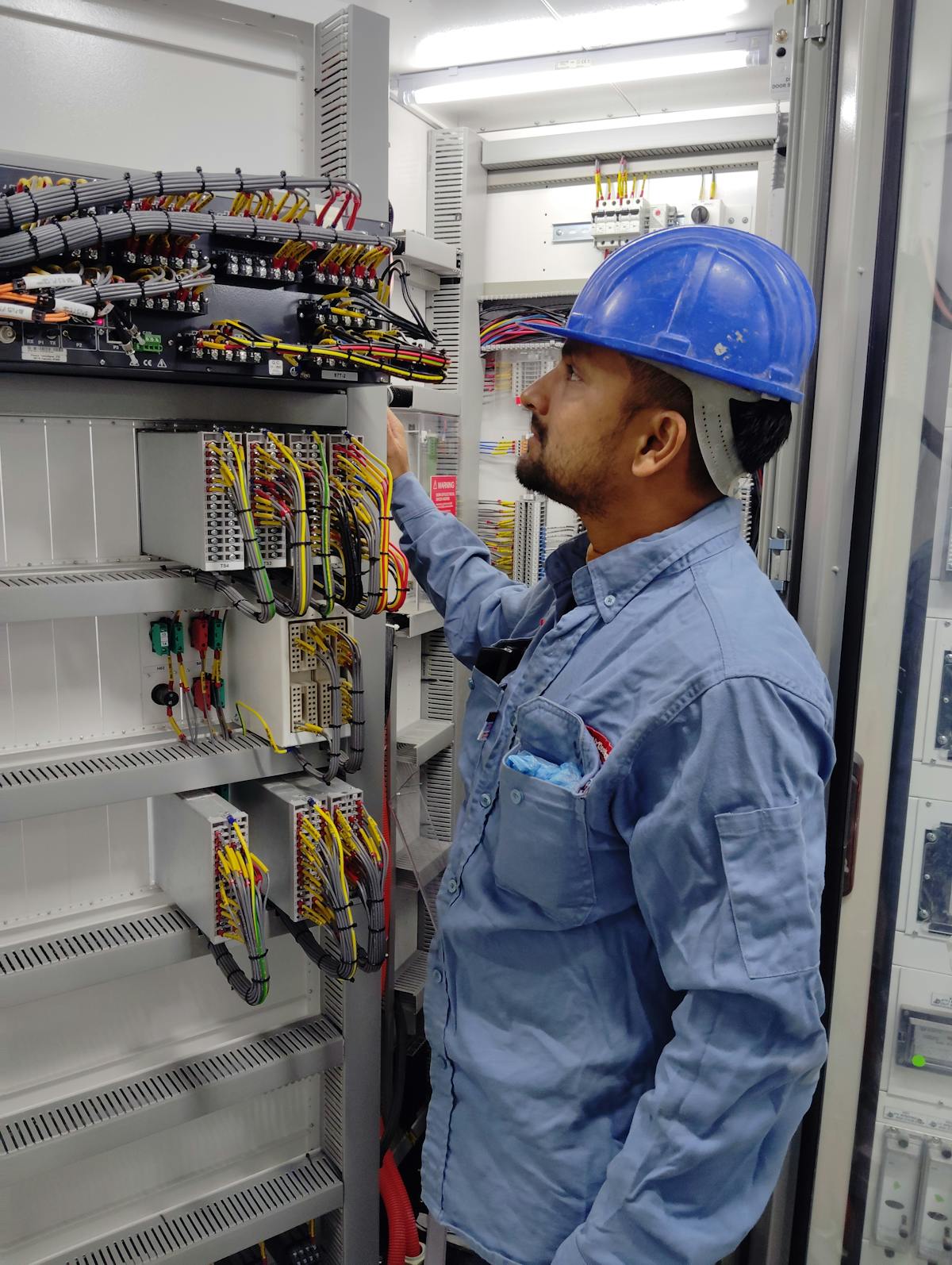
A steel-fixing helper from Begusarai district in Bihar, six years on site with L and T Construction across its Dehradun and Lucknow project offices, got a Saudi Binladin Group offer for a steel-fixer role on a Riyadh Metro completion-phase job. The Mumbai recruitment agency was licensed under the Indian Emigration Act with a Protectorate of Emigrants registration. The only formal qualification he held was a class-eight Bihar Board of Open Schooling certificate, and that needed apostille.
His L and T employment letter was notarised on the L and T Patna office HR letterhead. His police clearance came from the Patna Passport Seva Kendra. The Bihar HRD attestation ran through the State Education Department in Patna for the basic-education document, and for the trade qualification the agency arranged a Trade Test certificate at its Mumbai pre-departure assessment centre. MEA apostille followed at the authorised MEA service-provider route in Delhi, then certified Arabic translation of the experience letter and the Trade Test certificate by a Saudi-listed translator. The emigration check at the Patna Protectorate office cleared with the Saudi work permit in hand. Four weeks from agency intake to the flight from Delhi to Riyadh.
That sequence sits behind hundreds of Indian blue-collar moves to Saudi Arabia every year. This guide walks the whole journey: the jobs and the employers, why files get rejected, the exact apostille and certified Arabic translation steps in India, the documents the file carries, the POE clearance, and what SiZA handles for you against what stays with your recruitment agency.
What jobs do Indian blue-collar workers get in Saudi Arabia?
Saudi Arabia hires Indian blue-collar workers in large numbers across several sectors. The pay is significantly better than equivalent Indian roles, and the visa file moves cleanly when the documentation is right and the degree attestation and trade-certificate apostille are done before stamping.
- Construction labour for the giga-projects: NEOM, the Red Sea Project, AMAALA, Qiddiya, King Salman Park and the Riyadh Metro.
- Oil and gas support staff for Saudi Aramco and the downstream EPC contractors.
- Facility-services workers, including cleaners, gardeners, security guards and store keepers, for residential compounds and commercial facilities.
- Hospitality entry-level staff: kitchen helpers, waiters, room attendants and laundry staff for the hotel networks in Riyadh, Jeddah, Madinah, Makkah, Dammam and the new tourism destinations.
- Logistics and warehouse workers for the e-commerce, retail and distribution networks across Saudi Arabia.
- Last-mile delivery riders for noon, Mrsool, HungerStation, Jahez and the wider quick-commerce sector.
Why do Saudi blue-collar visa files get rejected?
The common problems are not exotic. The same five issues repeat across thousands of files:
- Vague experience letters with no role, site or supervisor detail.
- Mismatched spelling between the certificate and the passport.
- Expired police clearance.
- Missing trade certificates.
- Gaps in the trade-test letter when the Saudi employer asks for one.
Each of these can be fixed in India in a week or two, before the apostille in Delhi is done. Each one left in place gets the file sent back from the visa counter or from the employer's PRO in Riyadh.
Write the experience letter the way a Saudi PRO reads it
A Saudi employer reading your file is reading for proof you have actually done the work. Ask each past Indian employer for a detailed experience letter before you leave, and name the detail that matches your sector:
- Construction labour: the kind of work, such as steel fixing, formwork, masonry, scaffolding or painting.
- Oil and gas: the plant type and the role classification.
- Facility services: the building type and the supervisor's name.
- Hospitality: the hotel category and the role.
- Logistics: the warehouse type and the equipment handled.
A letter that names the role, the site or project, the period and the supervisor sails through. A one-line "to whom it may concern" gets queried. Get the wording right before the experience letter goes for MEA apostille, because correcting it afterwards means starting the apostille again.
What apostille and attestation do Saudi blue-collar documents need in India in 2026?
Saudi Arabia joined the Hague apostille treaty for Indian documents on 7 December 2022. That removed the older Saudi Embassy attestation step from these files entirely. Personal and educational documents now go through MEA apostille, not embassy attestation. The single sticker from the Ministry of External Affairs is what Saudi accepts today.
A quick rule worth keeping in your head, because the same workers often have offers from more than one Gulf country. Saudi is now a Hague country, so educational and personal documents take an apostille. The non-Hague Gulf countries, UAE, Qatar, Kuwait and Libya, still run on embassy attestation plus MOFA, never an apostille. Do not let an agent in either country tell you a Saudi file needs "embassy attestation" any more; since December 2022 it does not.
| Step |
What happens |
Typical time |
| State attestation or notarisation |
On the ITI trade certificate and any other educational documents. SDM, HRD attestation or notary depending on the issuing state. |
Roughly 7 to 45 working days for state HRD attestation, depending on the state and the issuing board; SDM or notary is faster |
| MEA apostille in Delhi |
The single MEA apostille that Saudi accepts since the Hague treaty, done at the authorised MEA service-provider route. |
3 to 5 working days |
| Certified Arabic translation |
By a Saudi-listed translator on the experience letters, the trade certificate and the marriage certificate where the spouse will follow. |
Runs alongside |
| Police Clearance Certificate |
The RPO issues the PCC, then it goes for MEA apostille. |
With the PCC issue |
| Tracked return courier |
Originals sent back to you or to the recruitment agency for visa stamping. |
3 to 7 working days |
The state attestation step is the one that swings the timeline. Educational documents go through the State HRD (Human Resource Development) directorate of the state that issued the certificate, and that can run anywhere from about 7 to 45 working days depending on the state and the board. Personal documents take the SDM or Home Department instead, which is quicker. If everything else is in order, the apostille in India and the certified Arabic translation finish inside two to four weeks once the state step clears.
Why certified Arabic translation is its own step
Saudi missions and Saudi employers do not accept a degree or an experience letter in English alone. They want a certified translation into Arabic, done by a translator the Saudi side recognises. We coordinate certified Arabic translation through Saudi-listed translators so the wording matches the apostilled original exactly; a mismatch between the English source and the Arabic version is one of the quiet reasons a file gets queried. You can read more about how we handle certified Arabic translation for Gulf documents on its own page.
Do Saudi blue-collar workers need POE emigration clearance?
Saudi Arabia is on the ECR list, so Protector of Emigrants (POE) clearance through the e-Migrate portal is mandatory for ECR passport holders being recruited through an MEA-registered Recruitment Agency. The agency submits the demand letter, the power of attorney from the Saudi employer and the candidate's documents through e-Migrate.
SiZA does not replace the recruitment agency. We work alongside the agency on the documentation, so that the apostille and certified Arabic translation are ready and clean when the agency loads the file into e-Migrate.
Which documents go into a Saudi blue-collar visa file?
- Trade certificate or proof of skill. The ITI trade certificate or relevant evidence. Some sub-skilled roles do not need one; the employer's classification decides.
- Detailed experience letters naming the role, the site or project type, the period and the supervisor. The detail matters by sector:
- Construction labour: the kind of work, such as steel fixing, formwork, masonry, scaffolding or painting.
- Oil and gas: the plant type and the role classification.
- Facility services: the building type and the supervisor's name.
- Hospitality: the hotel category and the role.
- Logistics: the warehouse type and the equipment handled.
- Police Clearance Certificate from the RPO, dated within six months of the visa application.
- Passport with at least eight to twelve months of validity.
- Saudi employer offer letter, the demand letter and the power of attorney from the Saudi employer to the Indian recruitment agency.
- GAMCA-approved medical fitness certificate, done at a GAMCA-approved centre before visa stamping.
- Trade-test letter where the Saudi employer asks for one. Some Saudi EPC contractors send a representative to test the candidate's skill at an Indian centre before the visa is approved.
The trade certificate and the experience letters are the two that almost always need authentication: state attestation or HRD attestation first, then MEA apostille, then certified Arabic translation. The offer letter, demand letter and power of attorney are the recruitment agency's side of the file.
What does SiZA handle, and what does the recruitment agency handle?
When you first send us scans on WhatsApp at +91 9220161774, often through your recruitment agency, we read the trade certificate, the experience letters and the supporting documents for visa-counter and employer fit. We tell you where letters need more detail, where state attestation or HRD attestation applies, and how the apostille work times against the visa stamping window. We share the realistic timeline and cost end to end before any payment is taken.
When the originals reach our Noida office, we handle the paperwork in India:
- State attestation, HRD attestation or notarisation on the trade certificate, depending on the issuing state.
- MEA apostille in Delhi at the authorised MEA service-provider route.
- Certified Arabic translation by a Saudi-listed translator (see our certified translation work).
- PCC apostille after the RPO issues the PCC.
- Tracked return courier to you or directly to the recruitment agency for visa stamping.
Named SiZA staff carry the documents between offices in Delhi NCR.
What we do not do: we do not run the recruitment agency role. The agency handles the demand letter, the power of attorney from the Saudi employer, the POE submission through e-Migrate and the visa stamping appointment. We do not run the GAMCA medical. We do not handle anything inside Saudi after you arrive.
For a free scan-review of your Saudi blue-collar file, send a WhatsApp message to +91 9220161774 with photos of your trade certificate where applicable, your experience letters and your Saudi offer letter if you have it.
Two more pages on this site worth reading: the Saudi Arabia documentation guide and the MEA apostille guide.