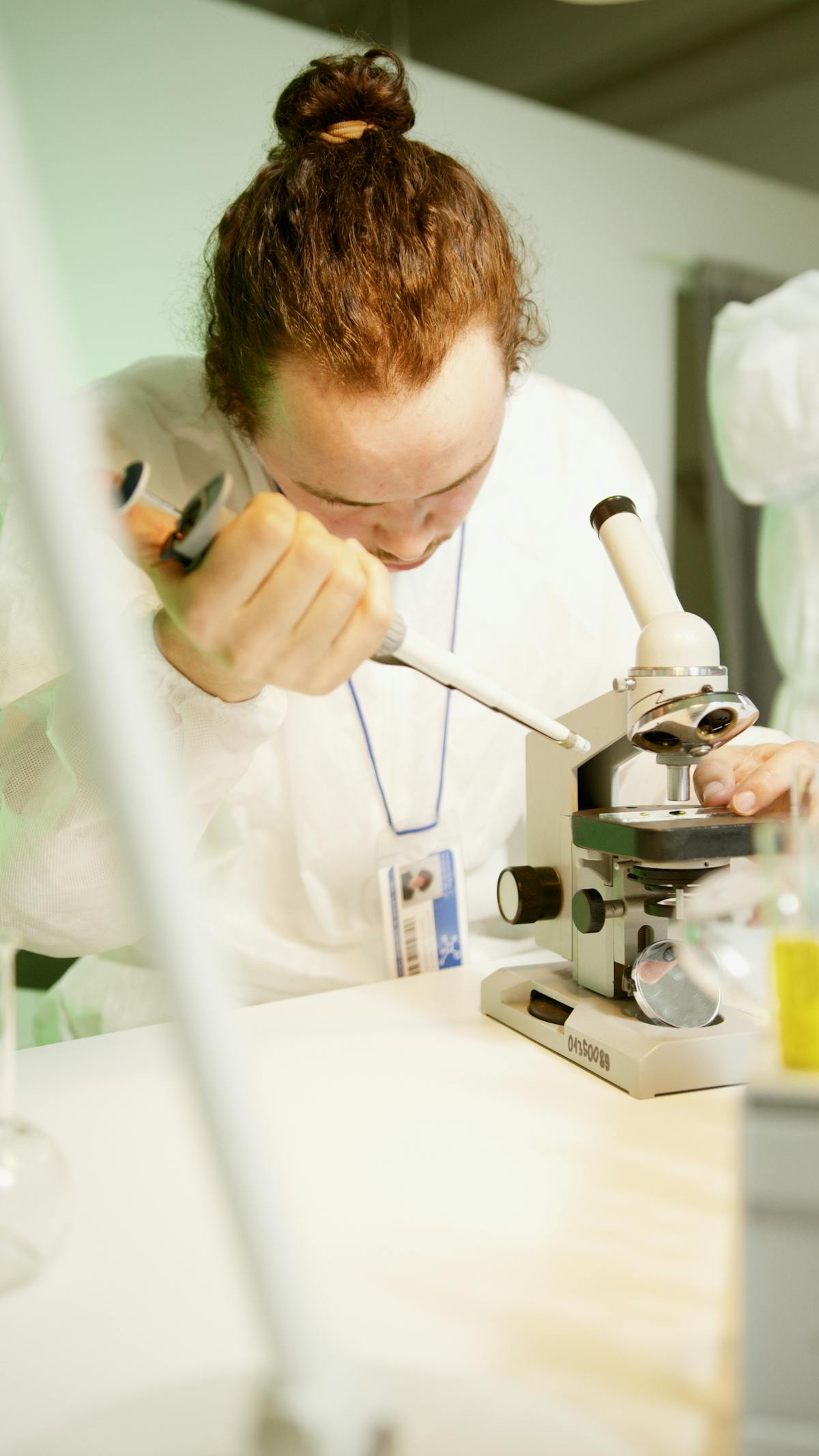
A biomedical sciences postdoctoral researcher from the Institute for Stem Cell Science and Regenerative Medicine (inStem) Bengaluru, PhD in Cell Biology from inStem 2024, MSc Biotechnology from the University of Hyderabad 2018, three years on a Wellcome Trust India Alliance Early Career Fellowship working on intestinal stem cell biology, with a Wellcome Trust Sanger Institute Cambridge postdoctoral fellowship offer in hand working in the Sanger Cellular Genetics programme. GBP 39,300 annual salary on a Skilled Worker visa under the Researcher route, three-year initial contract. The Sanger Institute HR file in Cambridge needed MEA apostille on her inStem PhD certificate, MEA apostille on her University of Hyderabad MSc, MEA apostille on her class-twelve Andhra Pradesh State Board certificate, MEA apostille on her marriage certificate from the Bengaluru Sub-Registrar, and a fresh PCC from the Bengaluru Passport Seva Kendra Lalbagh. The UK has been a Hague apostille destination for Indian documents since 1965, so the route stayed clean through the authorised MEA service-provider route. The Karnataka HRD step ran through the State Higher Education Department Multistoreyed Building Bengaluru. MEA apostille at the authorised MEA service-provider route. Typically four weeks end to end. The Sanger HR uploaded the apostilled set to UK Visas and Immigration (UKVI) through the Sanger Institute sponsor licence; her Skilled Worker visa was issued at VFS Delhi within three weeks. Arrival is typically at Heathrow for the May 2026 Sanger Cambridge start.
That sequence is the sequence behind most Indian researcher moves to the UK in 2026. The UK has been one of the more open research destinations for Indian scholars over the last decade, partly because the language is shared, partly because the academic culture maps cleanly to Indian undergraduate and Master's training, and partly because the post-Brexit visa system removed some of the EU-priority constraints that used to disadvantage non-EU researchers. For an Indian Master's graduate aiming at a UK PhD, an Indian PhD aiming at a UK postdoctoral fellowship, or an Indian senior researcher considering a UK permanent academic role, this is the documentation guide.
The first decision on a UK research file is the visa-route decision. Two routes dominate and each shapes the documentation differently.
The Skilled Worker visa is the employer-sponsored route. The UK university or research institute issues a Certificate of Sponsorship (CoS) to the candidate, who then applies for the visa. The Skilled Worker route is the default for postdoctoral positions, research fellowships funded through the institute, and lecturer or senior lecturer appointments. The 2026 minimum salary threshold for academic and research roles sits around GBP 30,960 for occupations on the Immigration Salary List (most postdoc and research positions qualify).
The Global Talent visa is the unsponsored route for senior research leaders. Endorsement comes from one of the designated bodies: the Royal Society for sciences, the British Academy for arts and humanities, the Royal Academy of Engineering, UKRI for general research, or one of the recognised arts and culture bodies. Global Talent removes the sponsor lock-in, which is useful for senior researchers who may move between institutions or take visiting positions across the UK. It carries a faster route to Indefinite Leave to Remain (three years instead of five for exceptional-talent endorsements).
For early-career researchers and PhD candidates themselves, the Student Visa is the route for the PhD, with the Graduate Route giving two years of post-study work (three years for PhDs) before the candidate moves to Skilled Worker or Global Talent.
The documentation work overlaps across all three routes: apostilled degrees and transcripts, marriage and birth certificates, PCC, TB test certificate. The differences sit in what the sponsor or endorsement body asks for.
What the UK reviewer actually reads: publications and supervisor reputation
For a UK research file, the candidate's publication list and supervisor reputation carry as much weight as the degree certificates. The reviewer at the UK university, the UKRI funding administrator, or the endorsement body looks at four things.
First-author publications in peer-reviewed journals. Q1 and Q2 journals (high impact factor relative to the field) carry the most weight. For early-career candidates, a single strong first-author paper in a high-impact journal can substitute for several middling papers. Cite the H-index where it helps.
Conference papers at recognised international conferences. For computer science especially, top-tier conference papers (NeurIPS, ICML, CVPR, ACL, SIGCOMM, OSDI, ASPLOS, USENIX Security, CRYPTO) are equal to or stronger than journal papers.
The supervisor's recommendation. The reviewer often knows the senior Indian supervisor by name or by reputation. A strong recommendation from a recognised supervisor at IIT (Bombay, Madras, Delhi, Kanpur, Kharagpur), IISc Bangalore, TIFR (Mumbai or Bangalore), NCBS Bangalore, inStem Bangalore, IIIT Hyderabad, IIIT Bangalore or a similar Indian research institute carries weight. Recommendations from less well-known supervisors land softer unless the work itself speaks loudly.
The candidate's own research statement. UK research applications include a one to three page research statement outlining prior work, current interests and proposed future work. This document does not need apostille; it is the candidate's own writing.
The apostille bundle and the MOI certificate
The UK has been a Hague Apostille party for Indian documents since 1965. MEA apostille is the standard authentication.
State HRD attestation on the Master's or PhD degree where the issuing state requires it (Maharashtra Mantralaya Mumbai, Karnataka SHED Multistoreyed Building Bengaluru, Tamil Nadu DTE Guindy, Telangana SHED Tarnaka, AP SHED Mangalagiri, Punjab SHED Mohali, UP SED Lucknow, MP SHED Bhopal, West Bengal SHED Bidhan Bhavan Kolkata, Bihar SED Patna). For central university degrees from JNU, BHU, Hyderabad Central University, the HRD step is sometimes skipped, but checking before submission is the safer path. Five to fourteen working days.
MEA apostille at the authorised MEA service-provider route counter on the Master's degree, PhD certificate if applicable, all marksheets, university transcripts, dissertation abstract or summary, supervisor and referee letters, marriage certificate, birth certificate of any joining children, and PSK Police Clearance Certificate. Three to five working days for the bundled set.
Medium of Instruction (MOI) certificate from the issuing Indian university. For most UK universities and the UK Home Office, the MOI certificate is accepted as English-language proof when the candidate's IELTS or TOEFL score is not available or has expired. The MOI is a one-page letter from the registrar confirming that the candidate's degree was taught and examined in English.
Certified English translation is rarely needed because Indian academic records are almost always in English. The exception is a regional-language document, where SiZA Multi Lingual Translators provides certified translation acceptable to UKVI.
PSK Police Clearance Certificate, for the visa application and any later Indefinite Leave to Remain.
TB test certificate from an IOM-approved clinic in India, mandatory for all India-resident applicants on a UK long-term visa.
The in India timeline from CoS to flight
For a UK PhD or postdoctoral start in September or October 2026, plan the in India process to run May to July 2026. State HRD attestation takes five to fourteen working days. MEA apostille takes three to five working days. PSK PCC takes seven to twenty-one working days. TB test at IOM clinic takes one to three days. MOI certificate from the issuing Indian university takes three to ten working days depending on the registrar.
For a UK postdoctoral fellowship start in January 2026, the route should run October to November 2025.
Where UK research labs hire Indian scholars in 2026
The Russell Group research universities. Cambridge, Oxford, Imperial College London, UCL, LSE, KCL, Edinburgh, Manchester, Bristol, Warwick, Durham, Glasgow, Birmingham, Sheffield, Nottingham, Leeds, Liverpool, Cardiff, Queen Mary, Southampton, Exeter, Newcastle and York. These universities run PhD positions and postdoctoral roles funded through UKRI grants, charity funding and university fellowships.
The major UK research charities. The Wellcome Trust funds biomedical and life sciences research at scale, with long-running Wellcome programmes hiring Indian postdocs in genomics, infectious disease, neuroscience, global health and drug discovery. Cancer Research UK funds oncology research. The British Heart Foundation funds cardiovascular research. The Medical Research Council (MRC), one of the UKRI councils, runs its own institutes including the LMB Cambridge, the MRC Laboratory of Molecular Cell Biology at UCL, and the Crick Institute jointly with Cancer Research UK and Wellcome.
UKRI and the seven research councils. UKRI (UK Research and Innovation) is the umbrella body. The seven councils are the AHRC (arts and humanities), BBSRC (biotechnology and biological sciences), EPSRC (engineering and physical sciences), ESRC (economic and social sciences), MRC (medical), NERC (natural environment) and STFC (science and technology facilities). Each council runs doctoral training partnerships (CDT) and postdoctoral fellowships that fund Indian researchers.
The Royal Society and the British Academy. The Royal Society funds science fellowships through the Newton International Fellowship (specifically for early-career international researchers) and the University Research Fellowship. The British Academy funds humanities and social science research.
The applied research institutes. The Francis Crick Institute (London) for biomedical research. The Rothamsted Research (Hertfordshire) for agricultural research. The National Physical Laboratory (Teddington) for measurement science. The UK Atomic Energy Authority research sites at Culham (Oxford). The Alan Turing Institute (London) for data science and AI.
What we run from Noida on a UK research file
A UK research file reaches SiZA after the CoS or admission letter is in hand, or earlier if the candidate is preparing documentation in advance of applications. The candidate sends the Master's degree, PhD certificate if applicable, all marksheets, university transcripts, dissertation abstract, MOI certificate, supervisor and referee letters, marriage certificate, children's birth certificates, current passport and PCC if available on WhatsApp to +91 9220161774.
When the originals reach our Noida office at C-25, C Block, Sector 8, the route runs state HRD where applicable, MEA apostille on the bundled academic and civil documents at the authorised MEA service-provider route, certified English translation of any regional-language documents (rare), tracked return of originals through documented courier, and coordination of the PSK PCC issuance if the candidate's current PCC has expired. The apostilled set is in the candidate's hands ready for the UK Student Visa, Skilled Worker visa or Global Talent visa application.
What SiZA does not do. We do not write the research statement or apply for the PhD. We do not negotiate the funding award with the UK university. We do not file the Skilled Worker visa or Global Talent visa application at VFS Delhi. We do not sit the IELTS or TOEFL exam. We do not run the TB test at an IOM clinic. We do not handle the UK arrival, biometric residence permit collection at Croydon or local post offices, or post-arrival HMRC and NHS registration.
Two related pages on the SiZA site: United Kingdom country documentation guide, MEA apostille services, students-going-abroad audience guide. For a free scan-review on your UK research file, send a WhatsApp message to +91 9220161774 with photos of your highest-degree certificate and your UK institute admission or offer letter.