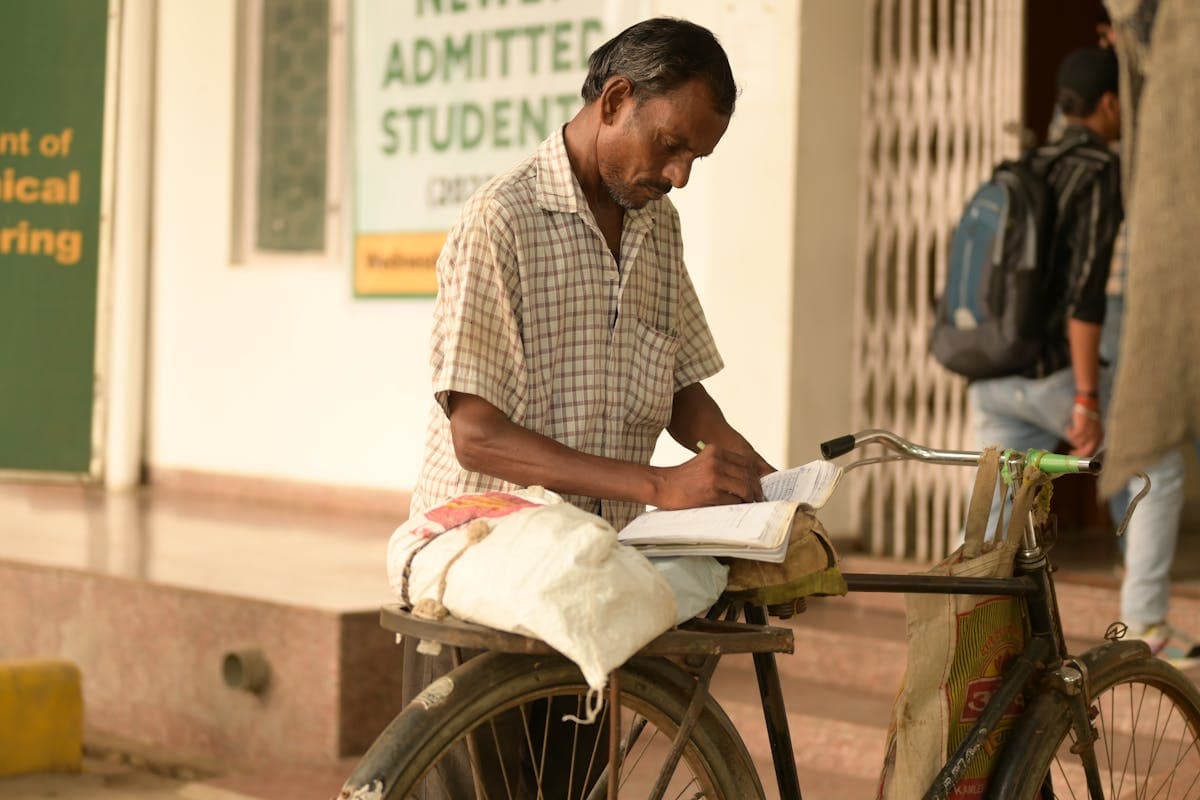
Around 9 million Indians live and work across the six Gulf Cooperation Council countries. The largest single contingent is in the UAE at roughly 3.5 million. Saudi Arabia is next at around 2.6 million, then Kuwait at around 1 million, Qatar at around 800,000, Oman at around 770,000 and Bahrain at around 350,000. Indians are the largest expatriate group in five of those six. Their work spans the visible economy of the Gulf in a way that is hard to overstate. A Kerala-trained scrub nurse at the Hamad Medical Corporation Heart Hospital in Doha. A Bengaluru civil engineer at Parsons supervising a Riyadh metro extension. A Hyderabad-trained anesthesiologist at Cleveland Clinic Abu Dhabi. A Patiala welder at NEOM in Tabuk Province. A Mangaluru chef at the Atlantis The Palm in Dubai. A Tirupati electrician in the Kuwait Oil Company industrial complex at Ahmadi. A teacher from Trichy at the Indian Community School in Salmiya, Kuwait. The remittances flowing back from this workforce to India added up to roughly USD 35 to 40 billion in 2024-25.
Every one of those names sat inside a documentation file before the job started. The file looks different by country. Saudi Arabia, Oman and Bahrain are Hague Apostille Convention destinations, so eligible Indian public documents use MEA apostille after the applicable prior attestation. The UAE, Qatar and Kuwait use embassy-attestation processes, with country-specific differences: the UAE process can include its India-based submission arrangement, while Qatar and Kuwait can require destination-side MOFA work. This page is the cross-Gulf documentation reference for an Indian worker comparing two or three destinations or planning an internal Gulf move.
Apostille or embassy attestation: which one does my Gulf country need?
This is the first question to settle because it decides the India-side authentication. Saudi Arabia, Oman and Bahrain use the Hague apostille process. The UAE, Qatar and Kuwait use embassy attestation. The recipient still decides any translation, licensing or destination-side MOFA requirement.
Saudi Arabia: MEA apostille since 7 December 2022
This is the biggest change in Gulf paperwork since the 2023 UAE MOFA digital rollout. For personal and educational documents going to Saudi Arabia, the work now runs through MEA apostille, not the older Saudi Embassy attestation. You can confirm Saudi Arabia's membership of the Hague Convention on the HCCH status table. The savings are real: roughly two weeks of timeline and a substantial per-document embassy fee removed from every file.
UAE, Qatar and Kuwait: embassy attestation
These three remain outside the Hague Convention. Depending on the document, the work can run through state HRD, Home Department or Chamber of Commerce, then MEA attestation and embassy attestation. Qatar and Kuwait can also require a destination-side MOFA step. There is no UAE, Qatar or Kuwait apostille issued by MEA for use under the Hague Convention.
What are the attestation steps for each Gulf country in 2026?
The table below sets the six countries side by side so you can see, at a glance, whether your destination needs apostille or embassy attestation, where the MOFA stamp happens, and what certified Arabic translation is required. Read down your own column before you spend a rupee.
| Country |
Authentication in India |
MOFA stamp |
Certified Arabic translation |
| Saudi Arabia |
State HRD attestation, then MEA apostille (since 7 Dec 2022) |
Covered by the apostille; no separate MOFA |
By a Saudi-listed translator |
| UAE |
State HRD attestation, MEA attestation, UAE Embassy attestation in Delhi via VFS Global |
UAE MOFA attestation applied in India via VFS Global (since 2023) |
By a UAE-listed translator |
| Qatar |
State HRD attestation, MEA attestation, Qatar Embassy attestation at Chanakyapuri, Delhi |
Qatar MOFA ratification in Doha after arrival |
By a Qatar-listed translator |
| Kuwait |
State HRD attestation, MEA attestation, Kuwait Embassy attestation at Chanakyapuri, Delhi |
Kuwait MOFA ratification in Kuwait City after arrival |
By a Kuwait-listed translator |
| Oman |
Applicable prior attestation, then MEA apostille |
Confirm any separate destination requirement with the recipient |
When the recipient requests it |
| Bahrain |
Applicable prior attestation, then MEA apostille |
Confirm any separate destination requirement with the recipient |
When the recipient requests it |
A few things the table cannot hold. Saudi visa stamping happens at the Saudi Embassy in Delhi or the consulates in Mumbai, Bengaluru, Hyderabad and Kolkata, after the GAMCA medical. UAE MOFA attestation and the UAE Embassy attestation are both done inside India and entirely digital through VFS Global, so nothing is couriered abroad for that step. And Kuwait does not usually require DataFlow for nurses or doctors, which sets it apart from the rest of the Gulf. The certified Arabic translation for any of these is something we handle through our certified translation desk.
Do Gulf nurses and doctors need DataFlow verification?
For most healthcare professionals (nurses, doctors, allied health), yes. Before the destination health regulator will license you, it runs DataFlow primary source verification. This is separate from attestation and it runs alongside it, not after.
Which Gulf regulators use DataFlow
The following regulators all require DataFlow primary source verification:
- SCFHS Saudi Arabia
- DHA Dubai
- DOH Abu Dhabi
- MOH UAE federation
- QCHP Qatar
- NHRA Bahrain
- OMSB Oman
The Kuwait Ministry of Health is the exception. It does not usually ask for DataFlow, so do not let anyone bill you for a Kuwait DataFlow report you were never going to need.
How long DataFlow takes
DataFlow takes three to six weeks and runs in parallel with the degree attestation and embassy attestation work, so the two timelines overlap rather than stack. Your degree, professional registration, Good Standing certificate and experience letters are verified directly with the issuing universities, councils and past employers.
Do I need POE emigration clearance for a Gulf job?
If you hold an ECR passport and you are going to the Gulf for employment, yes. Protector of Emigrants (POE) clearance through the e-Migrate portal is mandatory. The recruitment agency, which must be MEA-registered, submits the demand letter, the power of attorney from the Gulf employer and your documents through e-Migrate.
SiZA does not replace the recruitment agency. We work alongside the agency on the documentation work, so the apostille attestation and embassy attestation are ready when the agency files.
Which documents need attestation for a Gulf job?
A Gulf worker file usually carries the following, and almost all of it needs either apostille attestation (Saudi) or embassy attestation (the other five) before it will be accepted:
- Educational qualification or trade certificate, with state HRD attestation done first
- Experience letters from each Indian employer, with role-specific detail
- Marriage and birth certificates for family joining
- Police Clearance Certificate from the RPO
- Passport with at least eight to twelve months of validity
- Destination offer letter, the demand letter and the power of attorney to the Indian recruitment agency
- GAMCA-approved medical fitness certificate from a GAMCA-approved centre
For nurses and doctors, add the INC and state nursing council registration, or the NMC and state medical council registration, the Good Standing certificate, and the supporting documents that DataFlow will verify.
What does SiZA do on a Gulf worker file, and what stays with others?
What we do from our Noida office
When you first send us scans on WhatsApp at +91 9220161774, we read the documents against the destination country's embassy or ministry requirement. We tell you which path applies, what state HRD attestation is needed, where the embassy attestation and the MOFA stamp sit, and how the timing lines up against the visa stamping window. We share the realistic timeline and the realistic cost end to end before any payment is taken.
When the originals reach our Noida office, we run these steps for you:
- State HRD attestation on educational and trade documents
- MEA apostille for Saudi Arabia, or MEA attestation for the non-Hague Gulf destinations
- Embassy attestation at the destination consulate in Delhi, for the non-Hague countries
- Certified Arabic translation by a destination-listed translator
- Coordination of DataFlow where the destination regulator uses it
- Tracked return courier to you, or directly to the recruitment agency for visa stamping
What stays with others
We do not run the recruitment agency role. We do not file the destination visa. We do not run the GAMCA medical, since the GAMCA-approved centre does that. We do not handle anything inside the destination country after you arrive.
For a free scan-review of your Gulf worker file, send a WhatsApp message to +91 9220161774 with photos of your qualification, your experience letters and your destination offer letter (if you have one).
Worth reading next on the SiZA site: apostille in India, embassy attestation, HRD attestation and certified Arabic translation. For the country-specific picture, see Saudi Arabia, UAE, Qatar and Kuwait.